Benazir Nashonuma Program 2026: Registration, Stipends, and Benefits
Benazir Nashonuma Program 2026 – Registration, Eligibility, Stipends and Nutrition Support
Pregnancy and the first two years of a child’s life are important periods for healthy growth. Families facing financial difficulties may struggle to access nutritious food, regular health checkups and essential services.
The Benazir Nashonuma Program 2026, administered by the Benazir Income Support Programme (BISP), supports eligible pregnant and breastfeeding women and young children through conditional cash assistance, specialized nutritious food and maternal and child healthcare services.
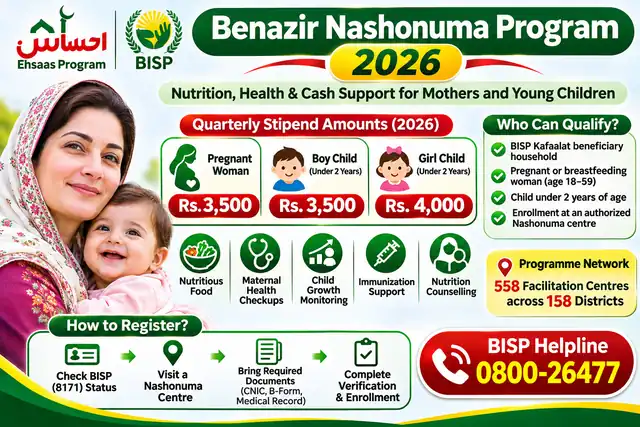
BISP’s current official program information lists quarterly stipends of Rs. 3,500 for pregnant women and eligible boy children, and Rs. 4,000 for eligible girl children.
This guide explains who may qualify, how enrollment works, which documents may be needed, and what families should know about health visits and payments.
Independent Website Notice: EhsaasProgram.org.pk is an independent informational website. We are not affiliated with BISP or the Government of Pakistan. We do not register beneficiaries, collect CNIC information or distribute stipends.
What Is the Benazir Nashonuma Programme?
Benazir Nashonuma is a nutrition and health-support initiative designed to reduce malnutrition and improve maternal and early childhood health in Pakistan.
The programme began in 2020 and is implemented through BISP in collaboration with health authorities and development partners, including the World Food Programme (WFP), UNICEF and WHO.
It focuses on the first 1,000 days of a child’s life, beginning during pregnancy and continuing through early childhood.
Rather than providing financial assistance alone, Nashonuma combines multiple services:
- Conditional cash assistance for eligible beneficiaries.
- Specialized nutritious foods for mothers and young children.
- Maternal and child health checkups.
- Growth monitoring and immunization follow-up.
- Nutrition education and counselling.
These services are designed to help families access appropriate nutrition and healthcare during a particularly important period of development.
Who Is Eligible for Benazir Nashonuma in 2026?
The programme is intended for specific groups already connected to BISP’s beneficiary system.
According to BISP’s official programme information, the main eligibility requirements include:
| Requirement | Explanation |
|---|---|
| BISP Kafaalat beneficiary | The mother must be part of an eligible household enrolled under Kafaalat |
| Pregnancy or breastfeeding | Eligible pregnant or lactating women can participate under programme conditions |
| Child’s age | Children under two years of age may qualify for applicable child-support services |
| Programme location | Beneficiaries must access an area covered by the Nashonuma rollout |
| Identity and medical verification | Required identity, pregnancy, child and vaccination records must be verified |
| Health follow-ups | Beneficiaries must meet the applicable programme conditions |
BISP’s current eligibility page describes pregnant or lactating women aged 18–59 already enrolled under Kafaalat, along with children of Kafaalat beneficiaries under two years old.
If you are unsure whether your household meets the initial BISP requirements, read our BISP Eligibility Guide.
Important: Being pregnant or having a child under two does not automatically guarantee enrollment. BISP must confirm the applicable eligibility conditions.
Benazir Nashonuma Stipend Amounts in 2026
Quarterly cash assistance is one part of the Nashonuma programme.
BISP’s current official programme page publishes the following stipend amounts.
| Beneficiary Category | Published Quarterly Stipend |
|---|---|
| Pregnant woman | Rs. 3,500 |
| Eligible boy child under two | Rs. 3,500 |
| Eligible girl child under two | Rs. 4,000 |
The programme provides higher child-related assistance for girls under its published stipend structure.
These figures should not be confused with the separate Benazir Kafaalat quarterly assistance amount.
Older Nashonuma articles may display Rs. 2,000, Rs. 2,500 or Rs. 3,000 because programme rates have changed over time.
Payment clarification: These are published programme rates, not confirmation that a particular beneficiary has received or is due an installment today. Payment eligibility and conditions must be confirmed through BISP.
The relevant Nashonuma centre can explain how the stipend conditions apply to a pregnant or breastfeeding mother and her child. Do not assume that all categories are automatically paid together.
How to Register for Benazir Nashonuma
Nashonuma enrollment requires verification through authorized programme facilities.
Checking a BISP household’s status through 8171 is different from completing Nashonuma registration.
Step 1: Confirm Your BISP Household Status
Start by checking whether the household is enrolled under the relevant BISP assistance programme.
The official 8171 portal provides available beneficiary status information.
If your household record is unclear, contact an authorized BISP Tehsil Office.
Step 2: Locate a Nashonuma Facilitation Centre
Nashonuma services operate through designated facilitation centres connected with participating healthcare facilities.
Some programme services are also delivered through mobile units.
Contact BISP or the appropriate local health authority to confirm the nearest authorized centre and its operating arrangements.
Do not assume every hospital has an active Nashonuma enrollment desk.
Step 3: Prepare the Required Documents
Bring the original documents relevant to your situation.
Common requirements may include:
- Mother’s valid CNIC.
- NADRA B-Form or Family Registration Certificate for a child, as applicable.
- Child’s vaccination or immunization card.
- Pregnancy verification or relevant medical record.
- Additional records requested by the authorized centre.
Different documents may apply to pregnant women, breastfeeding women and children.
Step 4: Complete Identity and Health Verification
At the authorized centre, staff verify the applicant’s relevant BISP and identity information.
Health staff may also verify pregnancy, the child’s age and other medical or nutritional details.
The exact registration procedure depends on the applicable programme requirements.
Step 5: Follow the Health and Nutrition Instructions
After enrollment, eligible participants receive instructions about nutritional support, follow-up visits and applicable conditions for financial assistance.
Keep any registration record or appointment information given by the programme staff.
Enrollment does not guarantee an immediate cash payment.
What Happens at a Nashonuma Facilitation Centre?
A visit to an authorized centre may involve several services.
Maternal Health Assessment
Pregnant women may receive pregnancy-related screening and guidance about required antenatal care.
Breastfeeding mothers may receive postnatal health and nutrition support.
The healthcare professional determines which services and follow-up appointments are appropriate.
Child Growth Monitoring
Healthcare workers may check a child’s weight, length or height and other growth indicators.
These measurements help trained professionals identify children who may require additional nutritional support or medical assessment.
If a healthcare worker identifies a concern, follow the referral or treatment advice given by the authorized service.
Nutrition Counselling
Programme staff explain the importance of appropriate nutrition during pregnancy, breastfeeding and early childhood.
Counselling may also cover the use of programme-provided nutritional foods, household hygiene and age-appropriate child feeding.
Immunization and Follow-Up
Parents may be asked to maintain the child’s immunization record and attend recommended health appointments.
Regular follow-up visits are part of the programme’s conditional support arrangements.
Specialized Nutritious Food – What Is Provided?
Financial assistance is not the only benefit offered under Nashonuma.
The programme also provides specialized nutritious foods intended to address nutritional deficiencies among eligible pregnant and breastfeeding women and young children.
The type of nutritional product depends on the beneficiary category and the applicable health programme protocol.
Beneficiaries should follow the instructions of trained healthcare staff regarding how the food is to be used.
Do not treat specialized nutritional foods as substitutes for necessary medical treatment. If a mother or child is unwell or showing signs of malnutrition, seek assessment from an appropriate healthcare professional.
These services are especially relevant for families who may have difficulty obtaining adequate nutrition during pregnancy or early childhood.
What Are the Conditions for Continued Assistance?
Nashonuma uses conditional cash transfers.
This means beneficiaries may need to complete certain health and nutrition-related activities to remain eligible for the relevant financial support.
BISP’s current programme information identifies the following important conditions:
| Programme Activity | Purpose |
|---|---|
| Antenatal and postnatal checkups | Support maternal health |
| Routine childhood immunization | Follow the national vaccination schedule |
| Child growth monitoring | Assess development and nutritional progress |
| Nutrition counselling | Improve understanding of maternal and child nutrition |
| Use of specialized nutritious food | Follow the instructions provided by programme health staff |
If a beneficiary misses an appointment, she should contact the authorized centre to ask about the applicable follow-up procedure.
Do not assume that a missed visit automatically causes permanent removal from the programme.
How to Check Nashonuma Payment or Registration Status
BISP’s official 8171 service can provide household-related status information, but it should not automatically be treated as a detailed Nashonuma payment-history portal.
If you need to confirm a Nashonuma installment, enrollment record or health-compliance issue, contact the facilitation centre handling your case or an authorized BISP office.
Keep your original identity documents and relevant programme records available for verification.
Payment delivery arrangements may change, so follow the instructions associated with your individual beneficiary record.
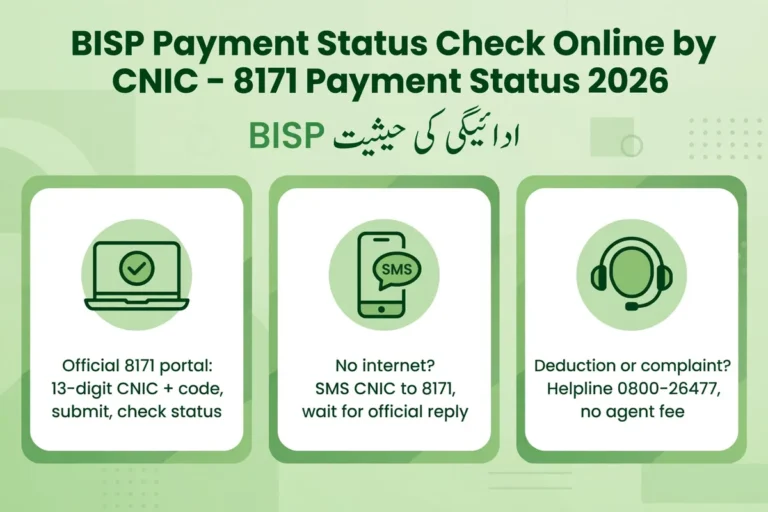
For general BISP payment information, see our BISP Payment Status Guide.
Benazir Nashonuma Programme Updates in 2026
The programme has continued expanding its maternal and child nutrition services.
In July 2026, BISP and its international partners announced a three-year extension of the programme aimed at reaching millions of additional women and children.
The World Food Programme reported that the initiative had reached approximately 4.7 million people since its introduction, with further expansion planned.
The announcement also described a national network of facilitation and nutrition-stabilization centres.
These developments show continued government and development-partner support for the programme.
However, nationwide expansion does not mean that every healthcare facility offers registration. Families should verify the nearest active location before travelling.
Common Registration and Payment Problems
My Household Is Not Enrolled in BISP Kafaalat
Nashonuma’s standard eligibility arrangements are linked to BISP Kafaalat beneficiary status.
If your household has never been surveyed, ask a BISP office whether NSER registration is required.
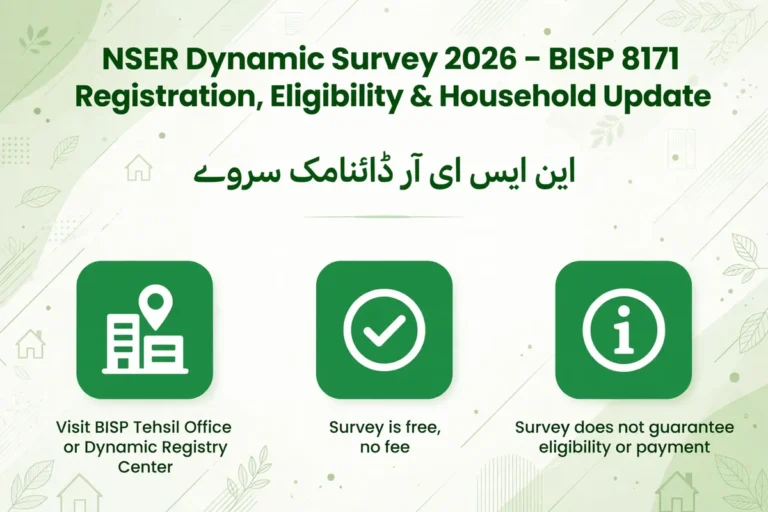
See our NSER Dynamic Survey Guide for more information.
My Child Does Not Have a B-Form
Ask the authorized Nashonuma centre which identity document is required for the child’s enrollment.
If you need a NADRA B-Form or family registration record, follow the relevant NADRA procedure.
Avoid submitting unofficial or altered documents.
I Cannot Find a Nashonuma Centre
Contact BISP or the relevant local public health office to ask where authorized services are operating.
Do not pay an agent who promises private enrollment.
My Stipend Has Not Been Received
A delayed payment may require verification of enrollment, programme conditions or payment arrangements.
Ask the authorized centre or BISP office to clarify the issue.
Avoid assuming that an SMS eligibility result confirms cash availability.
Someone Is Asking for a Registration Fee
Do not pay an unofficial agent for programme enrollment or access to government assistance.
Report suspicious payment demands through BISP’s official complaint channels.
BISP Helpline: 0800-26477
Frequently Asked Questions
Is Benazir Nashonuma available to all pregnant women?
No. The programme’s standard eligibility conditions are linked to BISP Kafaalat beneficiary status and other official requirements.
What is the Nashonuma stipend amount in 2026?
BISP’s current programme page lists Rs. 3,500 quarterly for pregnant women and eligible boy children, and Rs. 4,000 for eligible girl children.
Can I apply for Nashonuma through the 8171 portal?
The 8171 service can help with available BISP household status information. Nashonuma enrollment requires the relevant verification at an authorized programme centre.
What age children are covered?
The programme focuses on children under two years of age. Specific nutritional products and follow-up arrangements may depend on the child’s age and programme requirements.
What happens when a child turns two?
Under BISP’s programme design, child-specific Nashonuma support ends when the child reaches the programme’s age limit.
Is the Nashonuma stipend separate from Kafaalat?
Nashonuma is a separate conditional nutrition-support programme associated with the BISP beneficiary system. The amount and eligibility conditions are different from regular Kafaalat assistance.
Where can I make a complaint?
Contact an authorized BISP office or call 0800-26477 for official assistance.
Official Government Sources
For updated information about eligibility, registration and programme benefits, use these resources:
BISP – Official Benazir Nashonuma Programme — Eligibility, current published stipends, nutrition services and programme conditions.
World Food Programme – July 2026 Partnership Update — Programme expansion and partner announcements.
BISP Official Website — Beneficiary guidance and government announcements.
Official 8171 Portal — Available household-related status information.
BISP Helpline: 0800-26477
Information reviewed: November 13, 2026. Payment amounts, eligibility requirements and facilitation-centre arrangements may change. Confirm the latest information through BISP.
Disclaimer: EhsaasProgram.org.pk is an independent information website and is not affiliated with BISP, the Ehsaas Program, or the Government of Pakistan. We do not enroll beneficiaries, collect CNIC numbers, provide medical services, distribute nutritional supplements or guarantee financial assistance.
Related Guide: For another cash-assistance programme, see our Ehsaas 25000 Program guide.
2 Comments